
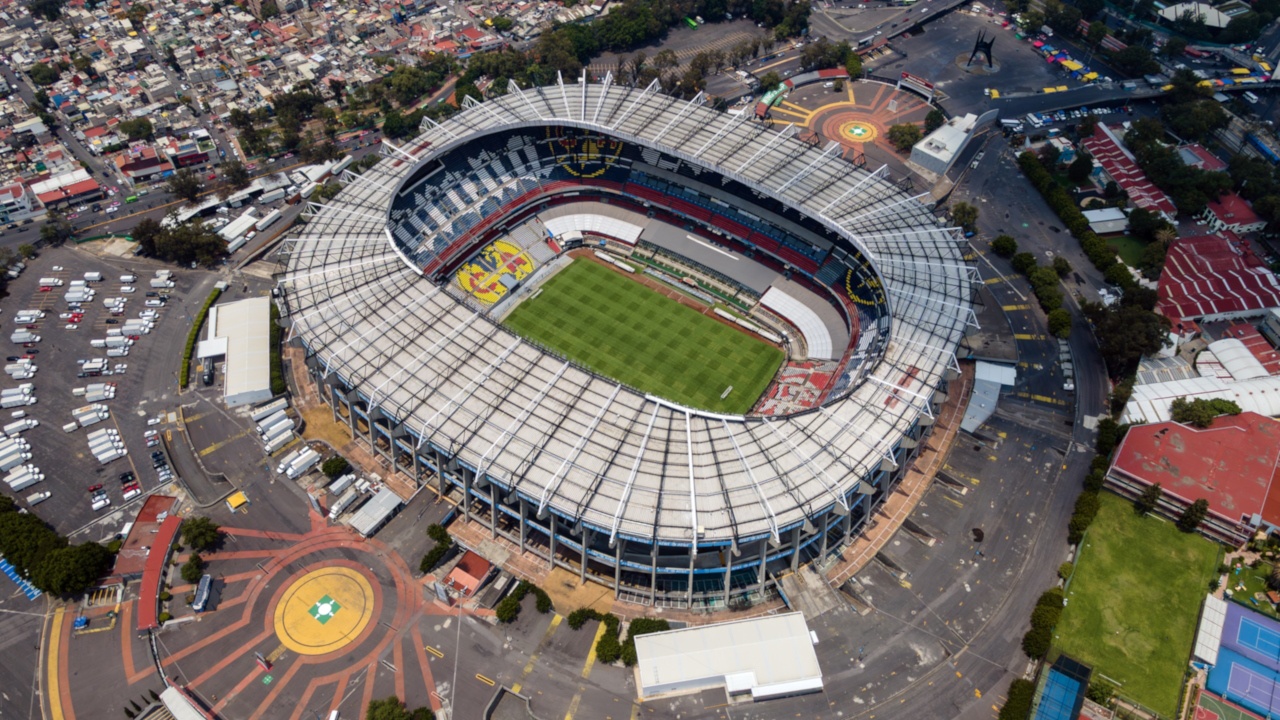
Prediction Markets Traded Nearly $460M on Mexico-England as World Cup Odds Swung From Red Card to Certainty
ReadKey Takeaways Kalshi traded about $402M and Polymarket $57.7M on Mexico-England.England’s win probability swung sharply on Jarell Quansah’s 54th-minute red card before recovering.A separate $1M Nevada sportsbook bet on Mexico to advance was lost as England held on to win 3-2.How the market moved with the matchTrading on the Mexico-England round-of-16 tie tracked one of the tournament’s wildest matches almost beat for beat. On Kalshi, contracts on England to advance opened close to even before kickoff – which was pushed back an hour after lightning near the Azteca Stadium forced a delay from 8 p.m. to 9 p.m. ET.When Jude Bellingham scored twice in 98 seconds to put England 2-0 up, England’s price spiked toward the mid-80s in percentage terms. Julián Quiñones pulled one back before halftime to make it 2-1, and the market eased back as a Mexico comeback looked live.In the 54th minute, England right back Jarell Quansah was shown a straight red card after a video review of a studs-up challenge, leaving England with 10 men – and traders briefly repriced a Mexico comeback, sending England’s probability tumbling on Kalshi and Polymarket alike.The line didn’t stay steady for long: Harry Kane converted a penalty in the 60th minute to restore a two-goal cushion at 3-1, and although Raúl Jiménez answered with a penalty of his own to make it 3-2, England’s line climbed steadily through the final half-hour as Mexico failed to break down the 10-man defense, and eventually reached 100% as the Three Lions lasted through the 11-minute marathon ordeal of added time as well to book their spot in the quarterfinals against Norway, who defeated Brazil earlier in the day.The volume behind those swings was substantial: Kalshi’s match market recorded about $402 million in trading and Polymarket roughly $57.7 million, a combined handle near $460 million on a single round-of-16 fixture. That scale sits alongside sector-wide growth that saw prediction-market platforms process billions of dollars in monthly volume through 2026, with Kalshi and Polymarket adding ever more granular in-game contracts.The event-contract action ran parallel to conventional sportsbooks, where the same result proved costly. One bettor at Station Casinos in Nevada had wagered $1 million on Mexico to advance before kickoff – $750,000 at -105 and $250,000 at -120, making news worldwide.Unlike a sportsbook, where bettors wager against the house, Kalshi and Polymarket let traders buy and sell yes/no contracts against one another, with each contract’s price mapping directly to an implied probability – which is why the intraday chart reads as a live gauge of the match’s swing rather than a fixed pregame line. The handle metric warrants a caveat: at sportsbooks, it’s essentially equivalent to wager totals, but since contracts are repeatedly resold at prediction markets before they are settled, the trading volume overstates the actual amount of money staked.