
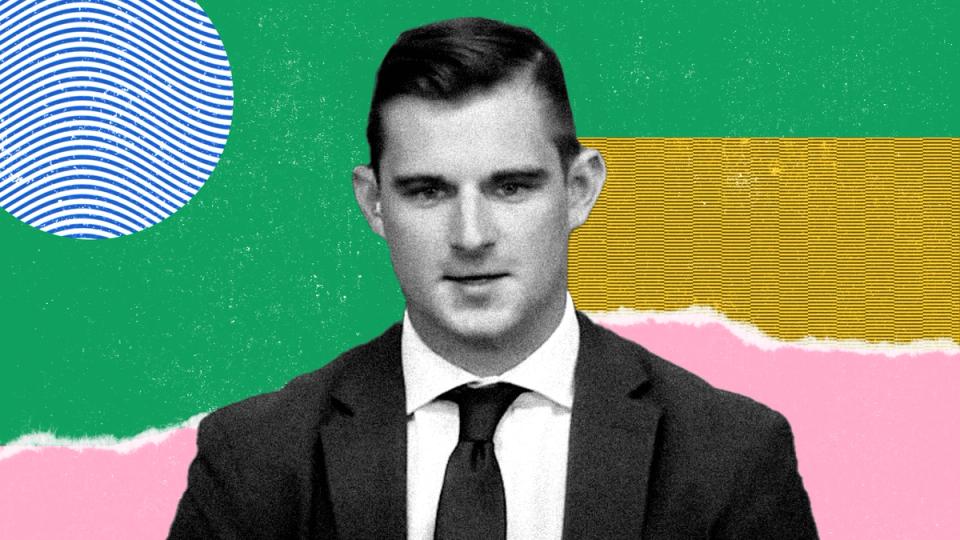
Most Influential: Bo Hines
ReadIt was a job that didn't exist before, occupied by a person who hadn't been in government before, but when U.S. President Donald Trump opened a new crypto adviser role in his White House, he brought in a former college football star and would-be politician to act as his first executive director of the Presidential Council of Advisers for Digital Assets.This feature is a part of CoinDesk's Most Influential 2025 list.STORY CONTINUES BELOW Don't miss another story. Subscribe to the State of Crypto Newsletter today . See all newsletters Sign me up By signing up, you will receive emails about CoinDesk products and you agree to our terms of use and privacy policy .Bo Hines, who had been known for his stint as a wide receiver at North Carolina State University and at Yale before a couple of unsuccessful runs for Congress, took on a very different role as a kind of cheerleader for Trump's pro-crypto policy efforts. He helped David Sacks, the president's crypto czar, advance various initiatives, including the crypto industry's biggest U.S. policy success to date: the Guiding and Establishing National Innovation for U.S. Stablecoins (GENIUS) Act to regulate U.S. stablecoin issuers.Though he'd also worked on the not-yet-achieved federal bitcoin BTC $ 92,855.48 reserve and on the legislation to set regulations for the wider crypto industry that's still crawling through the U.S. Senate, the GENIUS Act was the high-water mark of his White House tenure.Hines and his allies managed a relatively rapid push through the Senate, drawing a massive bipartisan vote, and a quick, matching approval from the House of Representatives. He was able to celebrate with the president when Trump signed the bill into law, marking a major achievement for his administration.Following that win, Hines hung up his White House hat and took a job as the chief U.S. executive for Tether, the stablecoin giant that — in light of the GENIUS Act — had designs on breaking fully into the U.S. market. Hines was replaced by Patrick Witt, a former McKinsey & Co. executive and who also happened to have played for the same Yale Bulldogs as quarterback, and he's picked up the same agenda items Hines had worked on.