
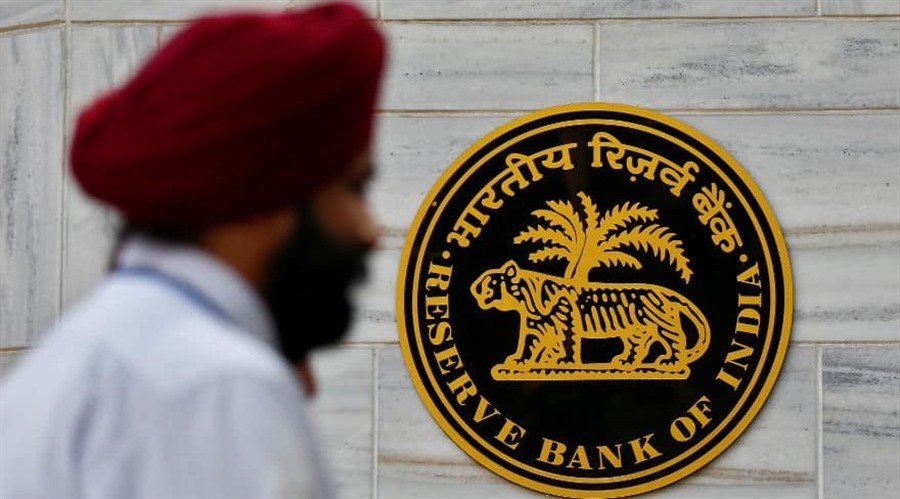
Leading FX Brokers Flagged by Indian Central Bank
ReadThe Indian central bank on Wednesday released an 'alert list' of brokers that are not authorized by it to deal in forex or operate an electronic trading platform (ETP) for forex transactions, thus making them illegal in the country.The list added a total of 34 names, including some of the big industry names like Alpari, eToro, Exness, Forex.com, FXCM, FXCM, IC Markets, IG Markets, OctaFX, TD Ameritrade, XM and XTB.The alert list came months after another warning by the Indian central bank against unregulated forex trading Forex Trading Forex trading is the buying and selling of foreign currencies with the aim of generating a profit. The value of currencies, especially floating currencies, fluctuate to varying degrees. This constant volatility of exchange rates opens the door for speculators to invest in a certain currency against another. The Forex market is the world’s biggest and most liquid market, with over $5 billion turnover every single day, with the market being open 24 hours a day, 5 days a week.It goes without saying that forex trading is a very attractive market for not only banks and hedge funds, but even for the small individual trader, due to the low barriers for entry. One literally only needs a computer with an internet connection, and some money deposited with a forex broker. As a simple example, if you were very confident that the Euro (EUR) was going to gain strength against the US Dollar (USD) in the mid to long term, then you may decide to buy (or go long on) EUR/USD. If the EUR/USD was trading at 1.1500 at the time of purchase, a €10000 investment would have cost you $11500. As time goes by, if the EUR/USD gets stronger, e.g. its exchange rate moves to 1.2000 over the course of a few months, and you decided to close your trade there and then, you would have netted $12000, i.e. a profit of $500. No One-Size-Fits-All Approach to Forex Trading Whilst forex trading is easy to delve into, it’s notoriously difficult to master, especially for those without a financial background. A lot of time and effort is needed to practice trading on demo and eventually on real accounts. No doubt it takes dedication, discipline and patience, along with developing an edge to beat the market. That edge is gained by studying at least one of two fields, known as technical analysis and fundamental analysis. The former involves looking at currency charts, seeking out certain patterns using tools and software known as price action and indicators to help determine which way a particular forex pair may meander.By extension, the latter involves focusing on the latest news reports and geopolitical situation of the countries involved. Forex trading is the buying and selling of foreign currencies with the aim of generating a profit. The value of currencies, especially floating currencies, fluctuate to varying degrees. This constant volatility of exchange rates opens the door for speculators to invest in a certain currency against another. The Forex market is the world’s biggest and most liquid market, with over $5 billion turnover every single day, with the market being open 24 hours a day, 5 days a week.It goes without saying that forex trading is a very attractive market for not only banks and hedge funds, but even for the small individual trader, due to the low barriers for entry. One literally only needs a computer with an internet connection, and some money deposited with a forex broker. As a simple example, if you were very confident that the Euro (EUR) was going to gain strength against the US Dollar (USD) in the mid to long term, then you may decide to buy (or go long on) EUR/USD. If the EUR/USD was trading at 1.1500 at the time of purchase, a €10000 investment would have cost you $11500. As time goes by, if the EUR/USD gets stronger, e.g. its exchange rate moves to 1.2000 over the course of a few months, and you decided to close your trade there and then, you would have netted $12000, i.e. a profit of $500. No One-Size-Fits-All Approach to Forex Trading Whilst forex trading is easy to delve into, it’s notoriously difficult to master, especially for those without a financial background. A lot of time and effort is needed to practice trading on demo and eventually on real accounts. No doubt it takes dedication, discipline and patience, along with developing an edge to beat the market. That edge is gained by studying at least one of two fields, known as technical analysis and fundamental analysis. The former involves looking at currency charts, seeking out certain patterns using tools and software known as price action and indicators to help determine which way a particular forex pair may meander.By extension, the latter involves focusing on the latest news reports and geopolitical situation of the countries involved. Read this Term platforms.“The Alert List is not exhaustive and is based on what was known to RBI… An entity not appearing in the Alert List should not be assumed to be authorized by the RBI,” the central bank stated.Interestingly, the list includes FXStreet, which is a market news and analysis platform and does not offer any brokerage services. "This list states that we are not authorised to deal with trading transactions, which we don't do and have never done... We do not manage money for third parties, execute operations or are involved in any trading activity in India. Therefore, being added by the RBI is not a concern for us," said an FXStreet spokesperson.Finance Magnates reached out to both the Reserve Bank of India (RBI) but did not receive any response, as of press time.XTB, a Poland-listed broker, also confirmed that it "is not operating in India and does not offer services to residents of India."Exness, which is a big name in the retail CFDs brokerage industry said: "Being a world-leading multi-regulated broker, we were quite taken aback to see our name on that list. We believe in offering people the ability to trade, speculate, and gain exposure to currencies and other notable financial assets, in a fair and transparent way. We pride ourselves on offering our clients complete transparency since the moment they join us, and that is doubly important when it comes to their funds."Local Law ViolationsIndia does not regulate or directly ban retail over-the-counter (OTC) trading markets. This allows many forex Forex Foreign exchange or forex is the act of converting one nation’s currency into another nation’s currency (that possesses a different currency); for example, the converting of British Pounds into US Dollars, and vice versa. The exchange of currencies can be done over a physical counter, such as at a Bureau de Change, or over the internet via broker platforms, where currency speculation takes place, known as forex trading.The foreign exchange market, by its very nature, is the world’s largest trading market by volume. According to the Bank of International Settlements (BIS) latest survey, the Forex market now turns over in excess of $5 trillion every day, with the most exchanges occurring between the US Dollar and the Euro (EUR/USD), followed by the US Dollar and the Japanese Yen (USD/JPY), then the US Dollar and Pound Sterling (GBP/USD). Ultimately, it is the very exchanging between currencies which causes a country’s currency to fluctuate in value in relation to another currency – this is known as the exchange rate. With regards to freely floating currencies, this is determined by supply and demand, such as imports and exports, and currency traders, such as banks and hedge funds. Emphasis on Retail Trading for ForexTrading the forex market for the purpose of financial gain was once the exclusive realm of financial institutions.But thanks to the invention of the internet and advances in financial technology from the 1990’s, almost anyone can now start trading this huge market. All one needs is a computer, an internet connection, and an account with a forex broker. Of course, before one starts to trade currencies, a certain level of knowledge and practice is essential. Once can gain some practice using demonstration accounts, i.e. place trades using demo money, before moving on to some real trading after attaining confidence. The main two fields of trading are known as technical analysis and fundamental analysis. Technical analysis refers to using mathematical tools and certain patterns to help decide whether to buy or sell a currency pair, and fundamental analysis refers to gauging the national and international events which may potentially affect a country’s currency value. Foreign exchange or forex is the act of converting one nation’s currency into another nation’s currency (that possesses a different currency); for example, the converting of British Pounds into US Dollars, and vice versa. The exchange of currencies can be done over a physical counter, such as at a Bureau de Change, or over the internet via broker platforms, where currency speculation takes place, known as forex trading.The foreign exchange market, by its very nature, is the world’s largest trading market by volume. According to the Bank of International Settlements (BIS) latest survey, the Forex market now turns over in excess of $5 trillion every day, with the most exchanges occurring between the US Dollar and the Euro (EUR/USD), followed by the US Dollar and the Japanese Yen (USD/JPY), then the US Dollar and Pound Sterling (GBP/USD). Ultimately, it is the very exchanging between currencies which causes a country’s currency to fluctuate in value in relation to another currency – this is known as the exchange rate. With regards to freely floating currencies, this is determined by supply and demand, such as imports and exports, and currency traders, such as banks and hedge funds. Emphasis on Retail Trading for ForexTrading the forex market for the purpose of financial gain was once the exclusive realm of financial institutions.But thanks to the invention of the internet and advances in financial technology from the 1990’s, almost anyone can now start trading this huge market. All one needs is a computer, an internet connection, and an account with a forex broker. Of course, before one starts to trade currencies, a certain level of knowledge and practice is essential. Once can gain some practice using demonstration accounts, i.e. place trades using demo money, before moving on to some real trading after attaining confidence. The main two fields of trading are known as technical analysis and fundamental analysis. Technical analysis refers to using mathematical tools and certain patterns to help decide whether to buy or sell a currency pair, and fundamental analysis refers to gauging the national and international events which may potentially affect a country’s currency value. Read this Term and contracts for differences (CFDs) brokers to target Indian nationals. However, the clients are violating the local forex law, FEMA while taking deposits on those locally unauthorized platforms.ADVERTISEMENTWhile it is not clear if all the named brokerages are onboarding clients from India, at least a few of them are definitely running aggressive marketing campaigns targeting potential Indian clients. They are onboarding Indian clients under European or offshore licensed entities.“The RBI reiterates that resident persons can undertake forex transactions only with authorized persons and for permitted purposes, in terms of the FEMA,” the regulator stated. “While permitted forex transactions can be executed electronically, they should be undertaken only on ETPs authorized for the purpose by the RBI or on recognized stock exchanges.”Furthermore, the central bank clarified that “resident persons undertaking forex transactions for purposes other than those permitted under the FEMA or on ETPs not authorized by the RBI shall render themselves liable for legal action under the FEMA.”