
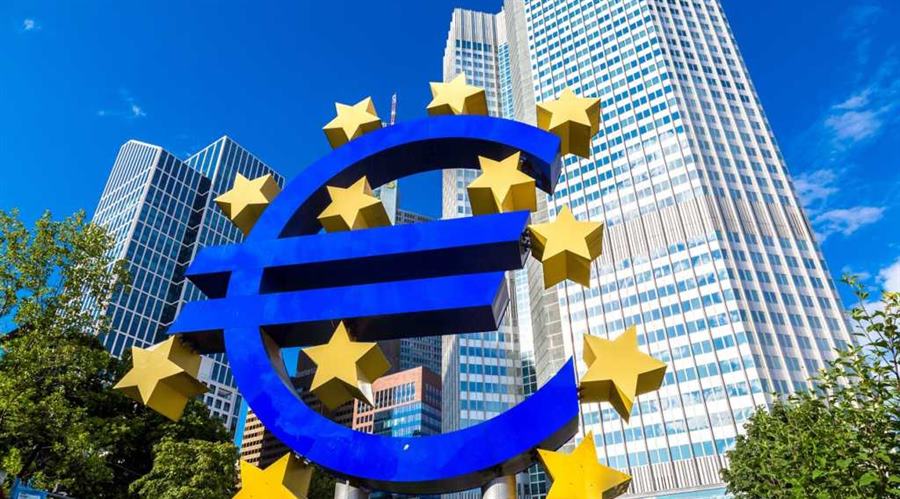
ECB Selects Amazon, Nexi, Others for Digital Euro Prototype Excercise
ReadThe European Central Bank (ECB), the apex bank of the 19 European Union countries that have adopted the euro, has selected five companies to participate in a digital euro payment prototyping exercise.ECB in a statement published on Friday said it will partner with the companies to “develop potential user interfaces for the digital euro.”The firms were chosen from a pool of 54 payment providers that responded to the ECB’s expressions of interest call made in April.The payment processors will each focus on specific payments Payments One of the bases of mediums of exchange in the modern world, a payment constitutes the transfer of a legal currency or equivalent from one party in exchange for goods or services to another entity. The payments industry has become a fixture of modern commerce, though the players involved and means of exchange have dramatically shifted over time.In particular, a party making a payment is referred to as a payer, with the payee reflecting the individual or entity receiving the payment. Most commonly the basis of exchange involves fiat currency or legal tender, be it in the form of cash, credit or bank transfers, debit, or checks. While typically associated with cash transfers, payments can also be made in anything of perceived value, be it stock or bartering – though this is far more limited today than it has been in the past.The Largest Players in the Payments IndustryFor most individuals, the payments industry is dominated currently by card companies such as Visa or Mastercard, which facilitate the use of credit or debit expenditures. More recently, this industry has seen the rise of Peer-to-Peer (P2P) payments services, which have gained tremendous traction in Europe, the United States, and Asia, among other continents.One of the biggest parameters for payments is timing, which looms as a crucial element for execution. By this metric, consumer demand incentivizes technology that prioritizes the fastest payment execution.This can help explain the preference for debit and credit payments overtaking check or money orders, which in previous decades were much more commonly utilized. A multi-billion-dollar industry, the payments space has seen some of the most innovation and advances in recent years as companies look to push contactless technology with faster execution times. One of the bases of mediums of exchange in the modern world, a payment constitutes the transfer of a legal currency or equivalent from one party in exchange for goods or services to another entity. The payments industry has become a fixture of modern commerce, though the players involved and means of exchange have dramatically shifted over time.In particular, a party making a payment is referred to as a payer, with the payee reflecting the individual or entity receiving the payment. Most commonly the basis of exchange involves fiat currency or legal tender, be it in the form of cash, credit or bank transfers, debit, or checks. While typically associated with cash transfers, payments can also be made in anything of perceived value, be it stock or bartering – though this is far more limited today than it has been in the past.The Largest Players in the Payments IndustryFor most individuals, the payments industry is dominated currently by card companies such as Visa or Mastercard, which facilitate the use of credit or debit expenditures. More recently, this industry has seen the rise of Peer-to-Peer (P2P) payments services, which have gained tremendous traction in Europe, the United States, and Asia, among other continents.One of the biggest parameters for payments is timing, which looms as a crucial element for execution. By this metric, consumer demand incentivizes technology that prioritizes the fastest payment execution.This can help explain the preference for debit and credit payments overtaking check or money orders, which in previous decades were much more commonly utilized. A multi-billion-dollar industry, the payments space has seen some of the most innovation and advances in recent years as companies look to push contactless technology with faster execution times. Read this Term usage of the digital euro, ECB noted in the statement.The five selected companies are American multinational technology firm, Amazon, Italy-based paytech company, Nexi, Spanish retail bank, CaixaBank, French multinational payments solution provider, Worldline, and the EBC-backed payment integration initiative, EPI.The companies will test for the following, respectively: e-commerce payments, point of sale payments initiated by the payee, peer-to-peer online payments, peer-to-peer offline payments, and point of sale payments initiated by the payer.ECB explained, “The aim of this prototyping exercise is to test how well the technology behind a digital euro integrates with prototypes developed by companies.“Simulated transactions will be initiated using the front-end prototypes developed by the five companies and processed through the Eurosystem’s interface and back-end infrastructure.The central bank pointed out that it has no plan to re-use the prototypes in the subsequent phases of the digital euro project.The Digital Euro ProjectADVERTISEMENTOn 2 October 2020, the ECB published a report that examined the possibility of the issuance of a central bank digital currency (CBDC) or digital euro for retail payments by businesses and citizens in the European Union.In July last year, the Governing Council of the ECB followed up this report by launching a digital euro investigation project to be carried out in 24 months.The ECB also inauguarated a 30-member Digital Euro Market Advisory Group comprising of senior professionals from the retail payments industry.The project was designed to address key issues regarding the design and distribution of a digital euro.“A digital euro must be able to meet the needs of Europeans while at the same time helping to prevent illicit activities and avoiding any undesirable impact on financial stability and monetary policy,” the Governing Council explained.ECB in the new statement said the prototyping exercise “is an important element” in this ongoing two-year investigative project.The central bank noted that this phase of the project is expected to be completed during the first quarter of 2023.According to ECB President, Christine Lagarde, if the Eurosystem finally decides to start a formal CBDC project after the conclusion of the project, the central bank could launch a digital currency by 2025.If finally issued, the digital euro is expected to complement cash deposits, create synergies with the payment industry, and support the digitisation of the European economy.It is also expected to ensure access to central bank money, help avoid the risks of unregulated payment solutions, and preempt the uptake of foreign currencies.